education guide
MBBS in China: The Complete Guide for 2026 Applicants
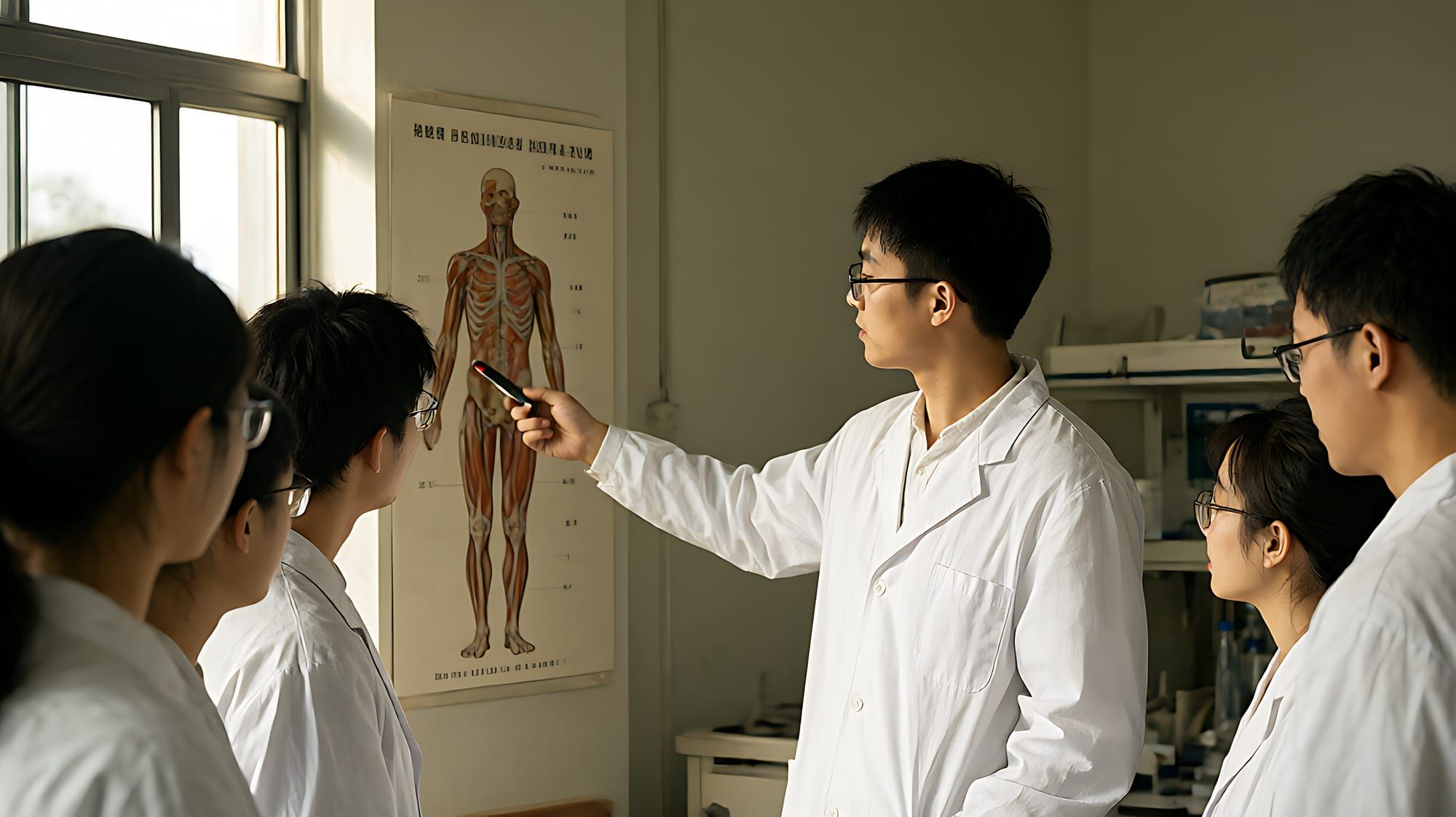
Short answer: yes, a Chinese MBBS is a legitimate, affordable route to a medical career — provided you choose an MOE-listed university, budget for the full six years, and plan for your home country’s licensing exam from day one.
China enrolls more international medical students than almost any other country. The draw is simple: English-medium MBBS programmes at government universities, tuition far below private medical seats in India, and modern teaching hospitals. The risks are equally simple: unlisted universities, agents who overpromise, and students who ignore the language requirement until clinical years force the issue.
What an MOE-listed MBBS actually is
Every year China’s Ministry of Education publishes the list of universities approved to teach MBBS in English to international students. If a school is not on that list, its English-medium MBBS is not officially sanctioned — walk away. The programme itself runs 5–6 years: pre-clinical years on campus, then clinical rotations in affiliated hospitals, with HSK 4 required before ward work.
Recognition: the three checkpoints
- MOE list (China) — the university may teach international MBBS in English.
- WHO World Directory — the school is findable for international recognition.
- Your home regulator — for India, NMC eligibility plus FMGE/NExT; other countries have their own exams (USMLE for the US, PLAB for the UK).
All three matter. We shortlist only universities that clear all three.
What it costs (2026 intake estimates)
| Item | Typical range (USD/year) |
|---|---|
| Tuition (MOE-listed, English medium) | 3,500 – 8,000 |
| Dormitory (university) | 800 – 1,500 |
| Living costs (city-dependent) | 2,400 – 5,000 |
| Insurance & residence permit | 300 – 600 |
A five-and-a-half-year programme therefore lands roughly between US$35,000 and US$80,000 for the costs listed above — before one-time extras such as flights, visa fees, application charges and initial setup. That is still a fraction of a private Indian MBBS seat at ₹60 lakh–1 crore+. CSC and university scholarships can reduce tuition substantially for strong applicants.
Admission timeline (September intake)
- June–September (previous year): shortlist universities, sit NEET if Indian
- October–December: prepare documents, personal statement, physical exam
- January–March: applications open and scholarship windows peak
- April–June: offers, JW202 issuance, visa file
- July–August: X1 visa at the embassy, flight, arrival support
- September: registration and residence permit
The traps we see
- Agents selling seats at universities not on the MOE list
- “Guaranteed FMGE clearance” coaching promises — nobody can guarantee an exam
- Ignoring Chinese until clinical year, then scrambling for HSK 4
- Paying tuition in full upfront to personal accounts instead of the university
How we help
We shortlist MOE-listed universities matched to your marks and budget, run the application and scholarship files, process the JW202 and visa, and stay with you through arrival and registration. The fit check takes four questions and gives you an honest yes/maybe/not-this-intake.
Quick answers
Is MBBS from China valid in India?
Yes, if the university is listed with the WHO World Directory of Medical Schools and approved in China's MOE list, and you pass India's FMGE/NExT licensing exam after graduating. That combination is necessary but not by itself sufficient — NMC eligibility (NEET-UG qualification and the regulations in force for your admission year) decides whether a specific seat leads to registration, so confirm the exact university and year against the current NMC rules before you commit money.
How much does MBBS in China cost per year?
Tuition at MOE-listed English-medium medical schools typically runs US$3,500–8,000 per year, with dorms at US$800–1,500 per year. Scholarships can offset much of this.
Is NEET required for MBBS in China?
Yes — Indian students must qualify NEET-UG to be eligible for the FMGE route after graduating abroad. There is no separate entrance exam for most Chinese medical universities.